TCP/IP Model: TCP/IP stands for Transmission Control Protocol/Internet Protocol. It’s a suite of communication protocols used to interconnect network devices on the internet. TCP/IP can also be used as a communications protocol in a private computer network (an intranet or extranet).
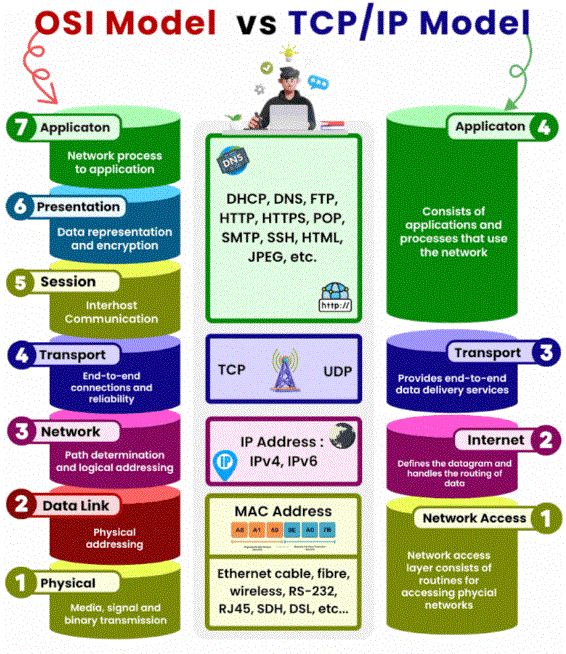
The TCP/IP model has 4 layers:
4. Application Layer: Handles communication between a web server and a web browser.
3. Transport Layer (TCP/UDP): Defines how applications can create channels of communication across a network.
2. Network/Internet Layer (IP): Defines how to address and route each packet to make sure it reaches the right destination.
1. Physical Layer: Deals with the physical characteristics of the transmission medium.
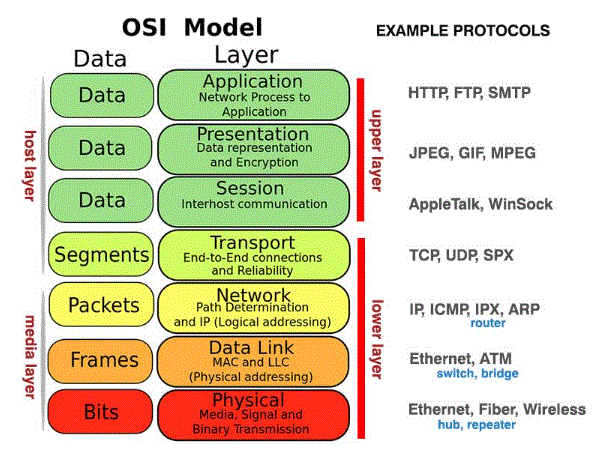
OSI Model: OSI stands for Open Systems Interconnection. It’s a conceptual model used to describe the functions of a communication system by dividing the communication procedure into smaller and simpler components.
The OSI model has 7 layers:
7. Application Layer: Provides network services to application processes.
6. Presentation Layer: Transforms data to provide a standard interface for the Application layer.
5. Session Layer: Establishes, manages, and terminates connections between applications.
4. Transport Layer: Provides transparent transfer of data between end systems.
3. Network Layer: Provides
switching and routing technologies.
2. Data Link Layer: Provides error-free transfer of frames from one node to another.
1. Physical Layer: Defines the physical characteristics of the transmission medium.
Comparison:
1. Layers: The OSI model has 7 layers, while the TCP/IP model has 4 layers.
2. Usage: TCP/IP is widely used and has become the de facto standard for internet communication. On the other hand, the OSI model is mostly used as a reference model.
3. Development: The OSI model was developed by the International Organization for Standardization (ISO) in 1984, while TCP/IP was designed by Vint Cerf and Bob Kahn in the 1970s.
4. Delivery of Packages: In the OSI model, the delivery of packages is guaranteed, while in the TCP/IP model, the delivery of packages is not guaranteed.
5. Replacement of Protocols: In the OSI model, replacing protocols is easier than in the TCP/IP model.
6. Reliability: The TCP/IP model is considered more reliable than the OSI model.
I hope you find this post useful and informative. Please feel free to share your thoughts and feedback in the comments. Stay tuned for more posts on cybersecurity, risk and compliance in the coming days.