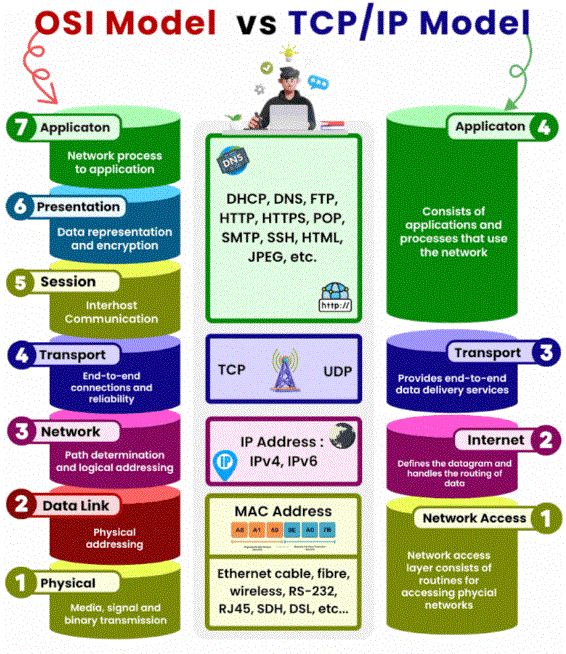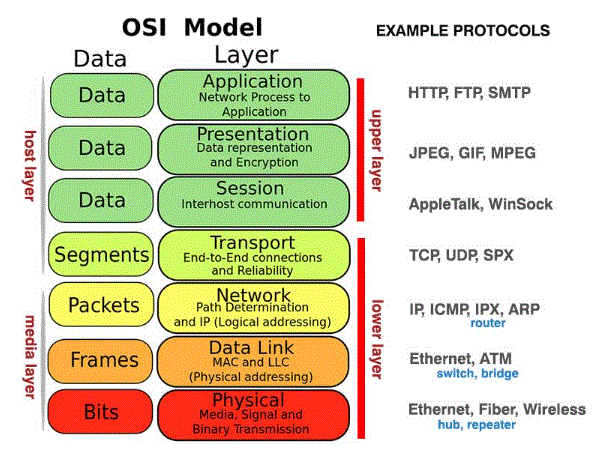
The OSI Model, which stands for Open Systems Interconnection, is a conceptual framework that standardizes the functions of a communication system into seven distinct categories, known as layers. This model was developed by the International Organization for Standardization (ISO) in 1984.
Here are the seven layers of the OSI Model:
1. Physical Layer (Layer 1): This is the lowest layer of the OSI model. It’s responsible for the actual physical connection between devices and transmitting raw data bits over a physical medium like cables, fiber optics, or wireless signals.
2. Data Link Layer (Layer 2): This layer ensures error-free transmission of data frames from one node to another. It’s divided into two sublayers: the Logical Link Control (LLC) and the Media Access Control (MAC).The LLC provides flow control and multiplexing for the data link, while the MAC deals with protocol access to the physical network medium.
3. Network Layer (Layer 3): The network layer is responsible for the delivery of individual pieces of data from the source host to the destination host. It defines the network address or IP address which is used by the routers to make forwarding decisions.
4. Transport Layer (Layer 4): This layer provides transparent transfer of data between end systems and is responsible for end-to-end error recovery and flow control. It ensures complete data transfer with protocols like TCP (Transmission Control Protocol) and UDP (User Datagram Protocol).
5. Session Layer (Layer 5): The session layer establishes, manages, and terminates connections between applications. It sets up, coordinates, and terminates conversations, exchanges, and dialogues between the applications at each end.
6. Presentation Layer (Layer 6): This layer provides independence from differences in data representation by translating between application and network formats.It ensures that data is in a usable format and is where data encryption occurs.
7. Application Layer (Layer 7): The application layer provides services for an application to ensure that effective communication with another application process on a network is possible.This layer serves as the window for users and application processes to access network services
Each layer in the OSI model has a specific function and allows for a systematic approach to networking. The model helps different computer systems to communicate with each other using standard protocols.
I hope you find this post useful and informative. Please feel free to share your thoughts and feedback in the comments. Stay tuned for more posts on cybersecurity, risk and compliance in the coming days.