


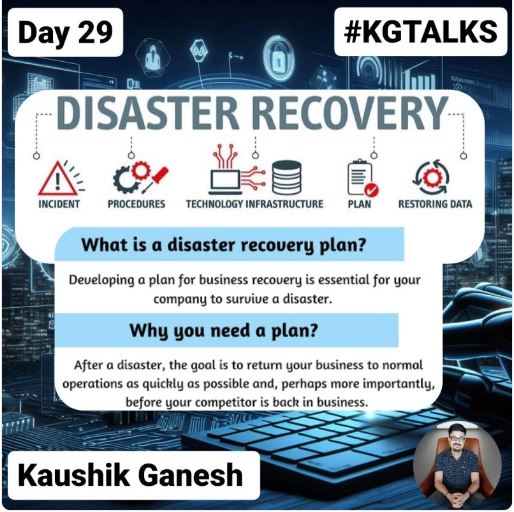
Understanding Disaster Recovery!🌐
Disaster Recovery (DR) is a critical aspect of any organization’s business continuity plan. It involves the process, policies, and procedures related to preparing for recovery or continuation of technology infrastructure critical to an organization after a natural or human-induced disaster.
1. Types of Disasters Disasters can be broadly categorized into two types:
Natural Disasters: These include events such as earthquakes, floods, hurricanes, and fires.
Human-induced Disasters: These encompass events like cyber-attacks, data breaches, and infrastructure failures.
2. Disaster Recovery Process The DR process typically involves the following steps:
Risk Assessment: Identifying potential disaster scenarios and understanding the impact on business operations.
Planning: Developing a disaster recovery plan that includes preventive measures, detective measures, and corrective measures.
Implementation: Implementing the plan and ensuring all systems, data, and processes are adequately protected.
Testing and Maintenance: Regularly testing the plan to ensure its effectiveness and updating it as necessary to address changes in the business environment.
3. Key Elements of a Disaster Recovery Plan A comprehensive DR plan includes:
Emergency Response: Procedures to ensure safety of all personnel and immediate response to a disaster.
Backup Solutions: Regular backup of data and systems to allow for recovery of lost information.
Recovery Strategies: Detailed procedures on how to recover critical systems and resume operations.
Communication Plan: A strategy for keeping all stakeholders informed during a disaster.
4. Best Practices for Disaster Recovery
Regular Testing: Conduct regular testing of your DR plan to ensure it works as expected and to identify any potential issues.
Continuous Updates: Keep your DR plan updated to reflect changes in your business operations, technology, and risk environment.
Training: Train your staff on their roles during a disaster and ensure they are familiar with the DR plan.
Vendor Management: If you’re using third-party services for your DR solutions, ensure they meet your business requirements and can deliver the level of service you need during a disaster.
Data Prioritization: Not all data is equally important. Identify and prioritize critical data and systems to ensure they are recovered first during a disaster.
Remember, a well-crafted Disaster Recovery plan can be the difference between a minor business interruption and a major organizational shutdown. Stay prepared, stay resilient!
I hope you find this post useful and informative. Please feel free to share your thoughts and feedback in the comments. Stay tuned for more posts on cybersecurity, risk and compliance in the coming days.


