


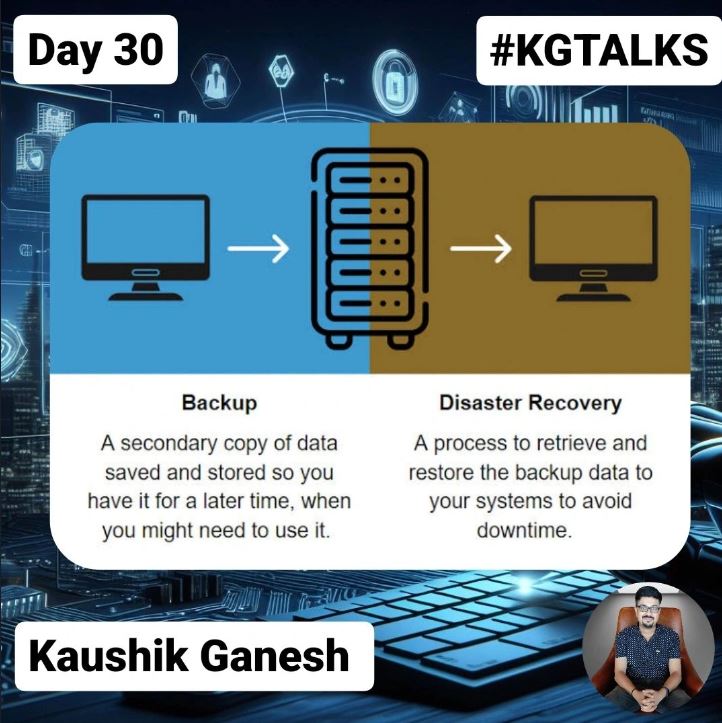
In our increasingly digital world, data has become the lifeblood of businesses. But what happens when disaster strikes? That’s where Backup and Recovery come into play.
Backup is the process of creating copies of data that can be used to restore the original in the event of data loss. It’s like an insurance policy for your data. This process involves making copies of your data at regular intervals, which could be daily, weekly, or even continuously in real-time, depending on the criticality of the data. These backups are then stored in a secure location, separate from the original data.
The key types of backup include:
1️⃣ Full Backup: This involves making a copy of all data. While this method provides the highest level of data protection, it requires more storage space and time.
2️⃣ Incremental Backup: This method only backs up the data that has changed since the last backup, saving both time and storage space.
3️⃣ Differential Backup: This backs up all the data that has changed since the last full backup.
Recovery, on the other hand, is the process of restoring data from these backups after a data loss event. It’s the action plan that gets you back on your feet. This could be due to a variety of reasons such as hardware failure, data corruption, human error, or even a cyber attack.
The key to a successful recovery lies in having a well-defined Recovery Plan. This plan should outline:
1️⃣ Recovery Point Objective (RPO): This is the maximum targeted period in which data might be lost due to a major incident.
2️⃣ Recovery Time Objective (RTO): This is the targeted duration of time within which a business process must be restored after a disaster in order to avoid unacceptable consequences.
Here are a few reasons why backup and recovery should be a top priority:
1️⃣ Data Loss Prevention: Whether it’s due to hardware failure, accidental deletion, or a cyber attack, data loss can have devastating effects on a business. Regular backups ensure that you have a copy of your data when you need it most.
2️⃣ Business Continuity: Downtime can be costly. A solid recovery plan can minimize downtime and ensure business operations continue with minimal disruption.
3️⃣ Regulatory Compliance: Many industries have regulations requiring businesses to maintain and protect certain data. Regular backups and a recovery plan can help meet these requirements.
Remember, in the world of data, it’s not a matter of if disaster will strike, but when. So, stay prepared and keep your data safe!
I hope you find this post useful and informative. Please feel free to share your thoughts and feedback in the comments. Stay tuned for more posts on cybersecurity, risk and compliance in the coming days.


