


Cybersecurity is the practice of protecting information systems and networks from unauthorized access, use, modification, or destruction. Cybersecurity is essential for organizations of all sizes and sectors, as they face various cyber threats such as malware, phishing, ransomware, denial-of-service attacks, and data breaches.
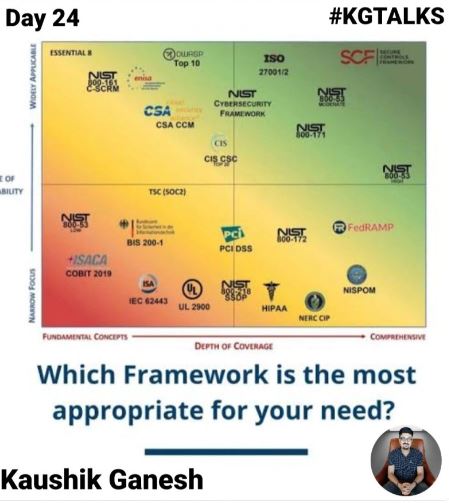
Information security standards are sets of guidelines, best practices, and requirements that help organizations implement and maintain effective cybersecurity measures and have varied scope and applicability. Some of the widely recognized information security standards are:
1. ISO 27001: An international standard for information security management systems (ISMS). It provides a systematic approach to managing information security risks, ensuring the confidentiality, integrity, and availability of information assets.
2. NIST 800-53: A set of security and privacy controls developed by the National Institute of Standards and Technology (NIST) for federal information systems and organizations. It provides a comprehensive catalog of controls that address various security and privacy objectives.
3. NIST CSF: A voluntary framework developed by NIST to help organizations improve their cybersecurity posture. It consists of five core functions: Identify, Protect, Detect, Respond, and Recover.
4. GDPR: The General Data Protection Regulation (GDPR) is a regulation that governs the processing of personal data in the European Union (EU) and the European Economic Area (EEA).
5. HIPAA: The Health Insurance Portability and Accountability Act (HIPAA) is a law that regulates the privacy and security of health information in the United States.
6. PCI DSS: The Payment Card Industry Data Security Standard (PCI DSS) is a set of security standards for organizations that store, process, or transmit cardholder data. It is designed to prevent fraud and protect cardholder data from unauthorized access, use, or disclosure.
7. COBIT: A framework for IT governance and management developed by ISACA. It provides a comprehensive set of control objectives, processes, and best practices for aligning IT with business goals, ensuring IT value delivery, managing IT risks, and monitoring IT performance.
8. CIS: A set of security benchmarks and best practices developed by the Center for Internet Security. It provides a collection of resources, such as CIS Controls, CIS Benchmarks, and CIS RAM, for helping organizations assess and improve their cybersecurity posture and resilience.
I hope you find this post useful and informative. Please feel free to share your thoughts and feedback in the comments. Stay tuned for more posts on cybersecurity, risk and compliance in the coming days.


