


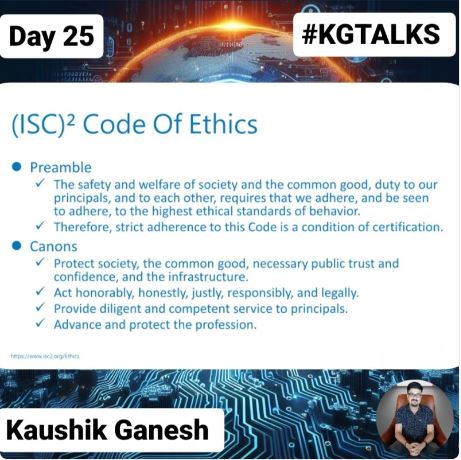
The (ISC)² Code of Ethics serves as a guiding framework for information security professionals. Let’s delve into the four canons of this code, along with examples:
Protect Society, the Common Good, Necessary Public Trust, and the Infrastructure:
As professionals, we must prioritize safeguarding society and its critical systems. This includes defending against cyber threats, ensuring data privacy, and preventing attacks on essential services.
Example: An information security analyst discovers a vulnerability in a critical infrastructure system. They promptly report it to the relevant authorities, preventing potential harm to society.
Act Honorably, Honestly, Justly, Responsibly, and Legally:
Upholding integrity and honesty is paramount. We must act ethically, transparently, and within the bounds of the law.
Example: A security consultant is offered a bribe to overlook security flaws during a penetration test. They decline the offer and report the incident to their organization’s ethics committee.
Provide Diligent and Competent Service to Principals:
Our duty is to serve our clients, employers, and stakeholders diligently. We should strive for excellence and maintain competence in our field.
Example: A certified information systems security professional (CISSP) assists a company in implementing robust access controls. They continuously update their knowledge to stay current with best practices.
Advance and Protect the Profession:
We contribute to the growth of the information security field by sharing knowledge, mentoring others, and advocating for ethical practices.
Example: An (ISC)² member participates in industry conferences, writes articles, and mentors junior professionals, thereby promoting the profession.
Remember, these canons are not rigid rules but provide high-level guidance. Ethical decisions often involve balancing conflicting interests, and professionals must exercise judgment while adhering to these principles.
I hope you find this post useful and informative. Please feel free to share your thoughts and feedback in the comments. Stay tuned for more posts on cybersecurity, risk and compliance in the coming days.


