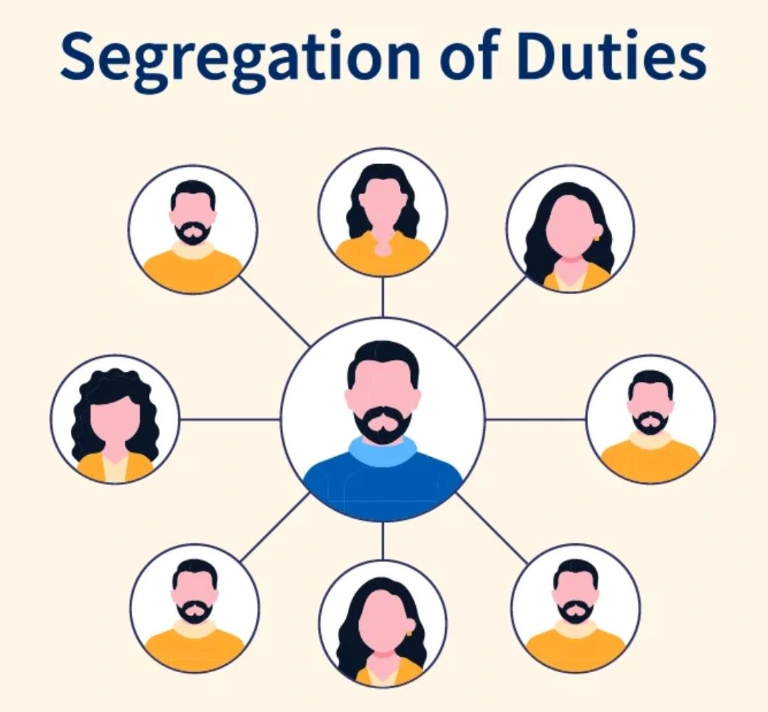
SOD refers to the practice of dividing critical tasks and responsibilities within an organization among different individuals or teams.
The primary objective is to prevent any single person from having unchecked control over key functions. By separating duties, organizations can enhance internal controls, reduce risks, and maintain integrity.
Categories of Functions in SOD:
1. Authorization:
This category involves granting permission or approval for specific actions.
Examples:
✳️Approving financial transactions (e.g., invoices, purchase orders).
✳️Granting access to sensitive systems or data.
2. Custody:
Custodial functions relate to handling and safeguarding assets.
Examples:
✳️Physical possession of cash, inventory, or valuable items.
✳️Managing access to physical facilities.
3. Recordkeeping:
Recordkeeping functions focus on maintaining accurate and complete records.
Examples:
✳️Documenting financial transactions.
✳️Updating employee records.
4. Reconciliation:
Reconciliation involves ensuring consistency and accuracy between different records or accounts.
Examples:
✳️Balancing bank statements.
✳️Verifying inventory levels against records.
Why Is SOD Important?
1. SOD helps mitigate risks associated with errors, fraud, and unauthorized actions.
2. It prevents scenarios where a single individual can manipulate processes for personal gain.
Examples of SOD Implementation:
1. Financial Processes:
✳️Separating roles such as invoice approval, payment processing, and financial reporting.
✳️Ensuring that no one person controls both initiating and authorizing financial transactions.
2. IT Security:
✳️Different teams handling access control, system administration, and monitoring.
✳️Developers not having direct access to production environments.
3. Personnel Management:
✳️Separating hiring, payroll, and termination responsibilities.
✳️Avoiding conflicts of interest by keeping different functions independent.
Remember that SOD is not just a theoretical concept; it directly impacts an organization’s risk posture and operational efficiency.
Implementing effective SOD practices contributes to a robust control environment and better governance.
I hope you find this post useful and informative. Please feel free to share your thoughts and feedback in the comments. Stay tuned for more posts on cybersecurity, risk and compliance in the coming days.