Dynamic Host Configuration Protocol (DHCP) is a network protocol used in Internet Protocol (IP) networks. It’s an essential part of how devices communicate on a network. It’s an application layer protocol that automates the assignment of IP addresses and other network configuration information to devices on a network.
Here’s how it works:
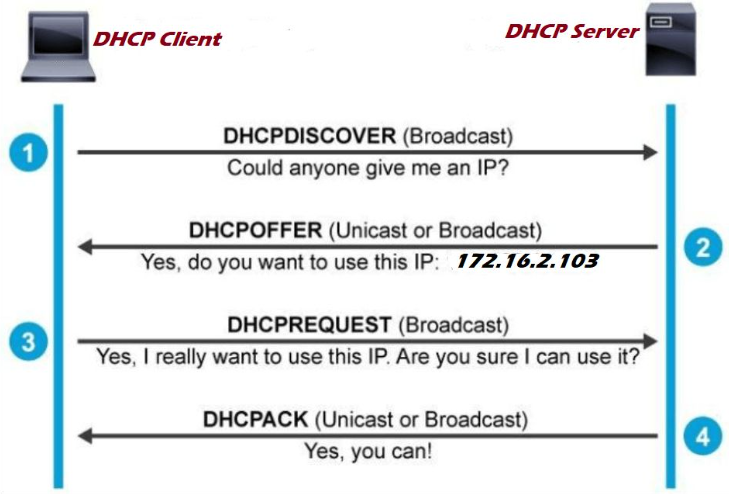
1️⃣ Discovery: When a device (known as a client) connects to a network, it broadcasts a DHCPDISCOVER message to identify any available DHCP servers.
2️⃣ Offer: Any DHCP server on the network can respond to the DHCPDISCOVER message with a DHCPOFFER message. This message contains an IP address that the server has reserved for the client, along with other network configuration information such as the subnet mask, default gateway, and DNS server.
3️⃣ Request: The client receives one or more DHCPOFFER messages and selects one. The client then sends a DHCPREQUEST message to the server it has chosen, requesting the offered IP address and configuration information.
4️⃣ Acknowledgment: The server acknowledges the client’s request with a DHCPACK message, formally assigning the IP address to the client and confirming the lease time (the amount of time the client can use the IP address before it must be renewed).
The DHCP protocol also includes mechanisms for reclaiming and reassigning IP addresses, which is crucial for networks with a limited number of available IP addresses.
Why use DHCP? One of the main benefits of DHCP is that it simplifies network administration. Without DHCP, network administrators would have to manually assign IP addresses to each device on the network. This could quickly become unmanageable in large networks with hundreds or thousands of devices.
In addition, DHCP helps prevent IP address conflicts that can occur when two devices are accidentally assigned the same IP address. By automatically assigning unique IP addresses, DHCP eliminates this risk.
So, whether it’s a small home network or a large enterprise network, DHCP plays a vital role in keeping the network running smoothly and efficiently.
I hope you find this post useful and informative. Please feel free to share your thoughts and feedback in the comments. Stay tuned for more posts on cybersecurity, risk and compliance in the coming days.