As we navigate the digital age, it’s crucial to understand the backbone of internet communication – Internet Protocol (IP).
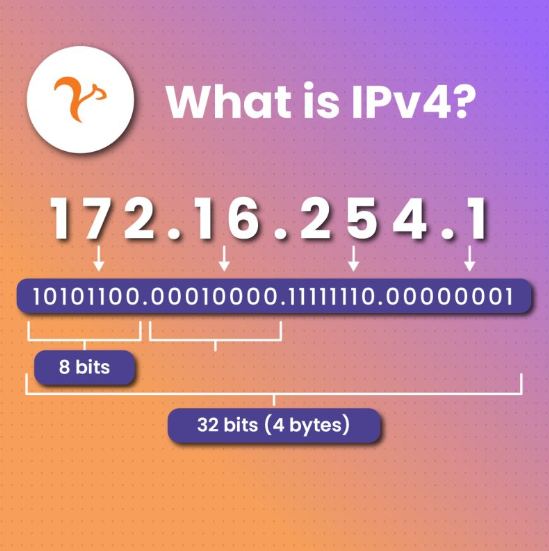
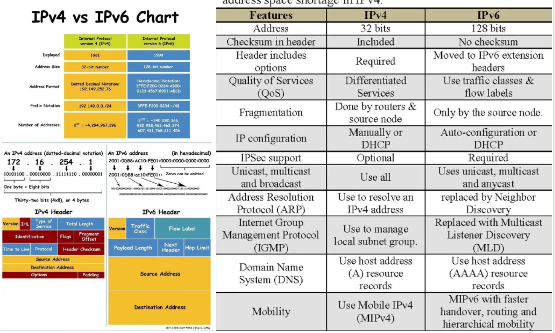
IPv4 (Internet Protocol Version 4), introduced in 1981, is the most commonly used IP address. It’s a 32-bit address, represented by 4 numbers separated by dots, each ranging from 0-255.
IPv6 (Internet Protocol Version 6), introduced in December 1995, is the newer version. It’s a 128-bit address, written as a group of 8 hexadecimal numbers separated by colons.
So, why the shift to IPv6? Here are some key advantages:
🎯Larger Address Space: With the explosion of internet-connected devices, IPv6’s larger address space is a necessity.
🎯Improved Security: IPv6 has built-in security features like data authentication and encryption.
🎯Simplified Header Format: IPv6 has a more effective header structure, increasing the speed of internet connection.
🎯 Prioritization: IPv6 supports Quality of Service (QoS) features, improving traffic management.
🎯Improved Support for Mobile Devices: IPv6 provides better and quicker connections for mobile devices.
It’s important to note that IPv4 and IPv6 can coexist on a single machine, and devices can agree on which IP version to use when communicating.
As we continue to innovate and connect, understanding these protocols is key to leveraging the power of the internet. Let’s embrace the future with IPv6!
I hope you find this post useful and informative. Please feel free to share your thoughts and feedback in the comments. Stay tuned for more posts on cybersecurity, risk and compliance in the coming days.