


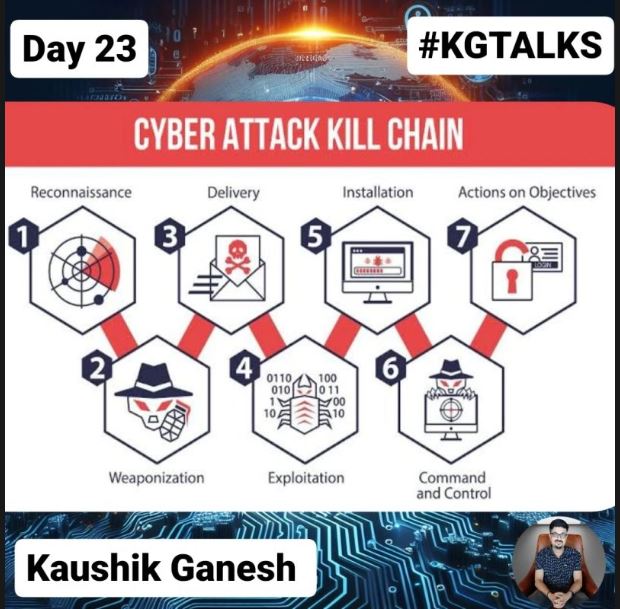
What is the Cyber Kill Chain?
As cyber threats continue to evolve, organizations must stay vigilant and adopt robust defense strategies. One powerful framework that helps us comprehend the anatomy of cyberattacks is the Cyber Kill Chain.
It is developed by Lockheed Martin to describe the stages of a cyber attack. It helps security professionals understand how attackers move through networks, identify vulnerabilities, and exploit them.
The Seven Stages of the Cyber Kill Chain:
1. Reconnaissance:
This is the initial stage where attackers research potential targets. They identify vulnerabilities, explore existing entry points, and discover new ones. Reconnaissance can happen both online and offline.
2. Weaponization:
After gathering necessary information during reconnaissance, attackers create malware to be used against their targets. This stage involves developing or modifying tools for the attack.
3. Delivery:
In this stage, cyber weapons are used to infiltrate the target’s network. Attackers may send phishing emails with malware attachments or exploit hardware/software vulnerabilities.
4. Exploitation:
Following delivery and weaponization, attackers take advantage of the vulnerabilities discovered earlier. They move laterally across the network to achieve their objectives.
5. Installation:
Attackers establish a foothold within the compromised system. This involves installing malicious software or gaining unauthorized access.
6. Command and Control (C2):
Once inside, attackers set up communication channels to control the compromised system remotely. They maintain access and issue commands.
7. Actions on Objectives:
Finally, attackers carry out their intended goals, which could include data theft, disruption, or other malicious activities.
Some Defences Against the Cyber Kill Chain:
1. Threat Intelligence:
Stay informed about emerging threats.
2. Vulnerability Management:
Regularly assess and patch vulnerabilities.
3. User Training:
Educate employees to recognize phishing attempts.
4. Network Segmentation:
Isolate sensitive systems to limit exposure.
5. Behavioral Analysis:
Detect anomalies and monitor suspicious activities.
6. Incident Response:
Be prepared to respond swiftly to the incidents.
7. Deception Measures:
Mislead attackers during exploitation.
8. Email Filtering:
Implement robust email filters to block malicious attachments and links.
9. Least Privilege:
Limit user permissions to prevent unauthorized software installation.
10. Backup Strategy:
Maintain regular backups to recover from successful attacks.
Remember, understanding the Cyber Kill Chain empowers us to proactively defend our digital assets. Let’s stay vigilant and secure! 💪🔐
I hope you find this post useful and informative. Please feel free to share your thoughts in the comments. Stay tuned for more posts on cybersecurity, risk and compliance in the coming days.


