


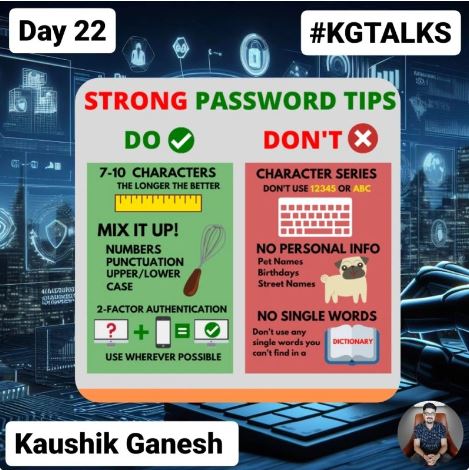
In today’s world, Managing passwords effectively is crucial for safeguarding both personal and professional accounts. Here are some practical tips to help you maintain strong and secure passwords:
1. Use Unique Passwords for Each Account:
– Avoid reusing the same password across multiple sites. If one account gets compromised, it won’t affect others.
– Use a password manager like LastPass or 1Password to generate and store unique passwords for each service. These tools securely encrypt your logins and passwords in one location, protected by a master password.
– Consider enabling two-factor authentication (2FA) for an extra layer of security.
2. Choose Strong Passwords:
– Aim for a mix of uppercase and lowercase letters, numbers, and special characters.
– Avoid common phrases, dictionary words, or easily guessable patterns.
– Longer passwords are generally more secure. Aim for at least 12 characters.
3. Use Passphrases:
– Instead of a single word, create a passphrase by combining random words or a sentence. For example: “BlueElephant$Jumping@Moon.”
– Passphrases are easier to remember and harder to crack.
4. Regularly Update Your Passwords:
– Change your passwords periodically, especially for critical accounts.
– Set reminders to update them every few months.
5. Secure Your Master Password:
– The master password for your password manager is crucial. Make it strong and memorable.
– Never share it with anyone or write it down where others can find it.
6. Avoid Common Mistakes:
– Don’t use easily guessable information like birthdays, pet names, or sequential numbers.
– Avoid using “password” or “123456” as your actual password.
7. Use Browser Password Managers (with Caution):
– Most web browsers offer built-in password managers. They suggest strong passwords and store them securely.
– However, be cautious if you share your device with others. Someone with access to your browser could view your saved passwords.
Remember, protecting your accounts is essential in today’s digital landscape. Implementing these practices will help you maintain better security for both personal and professional purposes. Stay safe online!
I hope you find this post useful and informative. Please feel free to share your thoughts and feedback in the comments. Stay tuned for more posts on cybersecurity, risk and compliance in the coming days.


