


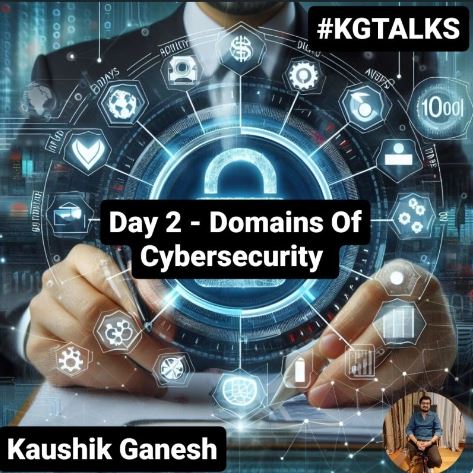
Domains of Cybersecurity
Cybersecurity is the protection of various systems that make up an organization’s assets from cyber threats. These systems can be grouped into different sub-domains based on their roles and features and how the aid the three pillars that are crucial for cybersecurity which are people, processes, and technology. Some of the sub-domains:
✥ Data Security: It protects the data in the systems from unauthorized access, modification, or loss. It uses encryption, access control, backup, and recovery methods.
✥ Disaster Recovery and Business Continuity Planning: It prepares for and recovers from disasters that affect the systems and operations. It uses contingency plans, backup systems, and alternative communication methods to minimize downtime and data loss.
✥ User Education: It educates the users about the cyber risks and their duties in preventing or reducing them. It involves training, awareness campaigns, and feedback mechanisms to foster a culture of cybersecurity.
✥ Network Security: It protects the network devices and infrastructure from unauthorized access, misuse, or attack. It uses firewalls, routers, switches, VPNs, and other network devices.
✥ Application Security: It protects the applications and software from malicious code, injection, or exploitation. It uses code review, testing, patching, and secure development methods.
✥ Endpoint Security: It protects the devices that connect to the network from malware and attacks. It uses antivirus, device management, and encryption tools.
✥ Cloud Security: It protects the data and applications on the cloud or using cloud services. It uses identity and access management, encryption, compliance, and auditing tools.
✥ Identity Management: It manages the identities and credentials of the users and devices accessing the systems. It uses authentication, authorization, and auditing techniques.
✥ IoT Security: It protects the devices and sensors connected to the internet and exchanging data. It uses encryption, firmware updates, device management, and network segmentation tools.
✥ Mobile Security: It protects the mobile devices and applications used by the users or the organization. It uses device encryption, app permissions, biometric authentication, and VPN tools.
✥ Operational Security: It protects the operations and processes of the organization from cyber threats. It uses risk assessment, incident response, and security policies and procedures.
✥ Critical Infrastructure Security: It protects the systems and services that are vital for the society, such as power, water, transportation, or communication. It uses physical security, redundancy, and resilience techniques.
I hope you find this post useful. Please feel free to share your feedback in the comments. Stay tuned for more posts on cybersecurity, risk and compliance.


