


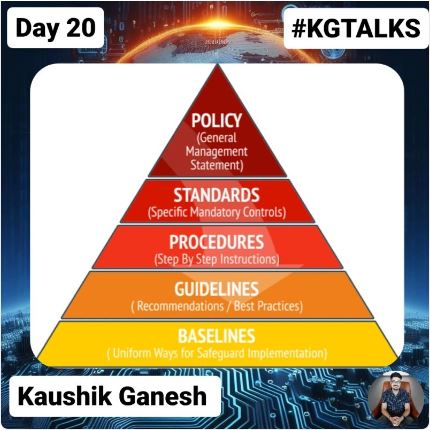
✣ Policies: They act as the guiding stars in the IT universe. These high-level statements set the tone for how an organization manages its IT resources. Think of them as the “what” and “why” behind decisions. Key policy areas include security, data privacy, and acceptable use.
✣ Standards: Standards ensure uniformity and quality. They define technical requirements and specifications. Picture them as the blueprints for IT systems. Whether it’s ISO/IEC 27001 for information security or ITIL for service management, standards keep the IT ship sailing smoothly.
✣ Procedures: Procedures are the workhorses of IT governance. They’re the step-by-step instructions for specific tasks. When a policy says, “Secure our systems,” procedures detail how to do it. Examples include incident response, change management, and backup procedures.
✣ Guidelines: Guidelines bridge the gap between policies and practical implementation. They offer practical advice and best practices. Imagine guidelines as the guide book. For instance, a guideline might outline how to handle password management, access controls, or software updates but it is not mandatory
✣ Baseline: A Baseline is the initial set of rules and standards for managing IT practices. For example, it includes base security policies, change management procedures, and compliance standards. They can be used as a reference point to monitor and improve their IT processes.
✣ Laws and Regulations: Legal and regulatory frameworks impact IT governance. These include data protection laws (like GDPR), industry-specific regulations (such as HIPAA for healthcare), and international standards (think PCI DSS for payment security). Compliance is non-negotiable.
Example:
Imagine a company implementing IT governance for data security. Their policy states that all employees must use strong passwords. The guideline provides details on password complexity. Procedures outline steps for changing passwords regularly. Standards define encryption protocols. Baseline acts like an reference and compliance ensures adherence to data protection laws.
Remember, effective IT governance isn’t just about checkboxes, It is about aligning IT with business goals, fostering accountability, and navigating the digital landscape with confidence.
I hope you find this post useful and informative. Please feel free to share your thoughts and feedback in the comments. Stay tuned for more posts on cybersecurity, risk and compliance in the coming days.


